Example 1
The side product of a chemical company is a mixture with 82 weight % of species A, and the remaining is species B. In this mixture, species A is the valuable component. If this mixture is sold with this composition, its price is 1.12 USD per kg. However, if the percentage of species A can be increased to 96%, the price in the market will be 1.58 USD per kg. It is proposed that a stream of species C will be used to strip the species B as shown below. In this process, 2 kg of C should be used for each kg of B entering the process.

As a chemical engineer, you are requested to show whether this investment is profitable or not. The cost of species C is 0.48 USD per kg and the production cost (including energy, labour, depreciation of equipment and all others) is 0.5 USD per kg of B stripped (i.e. kg of B in stream 3). Follow these steps to solve this problem:
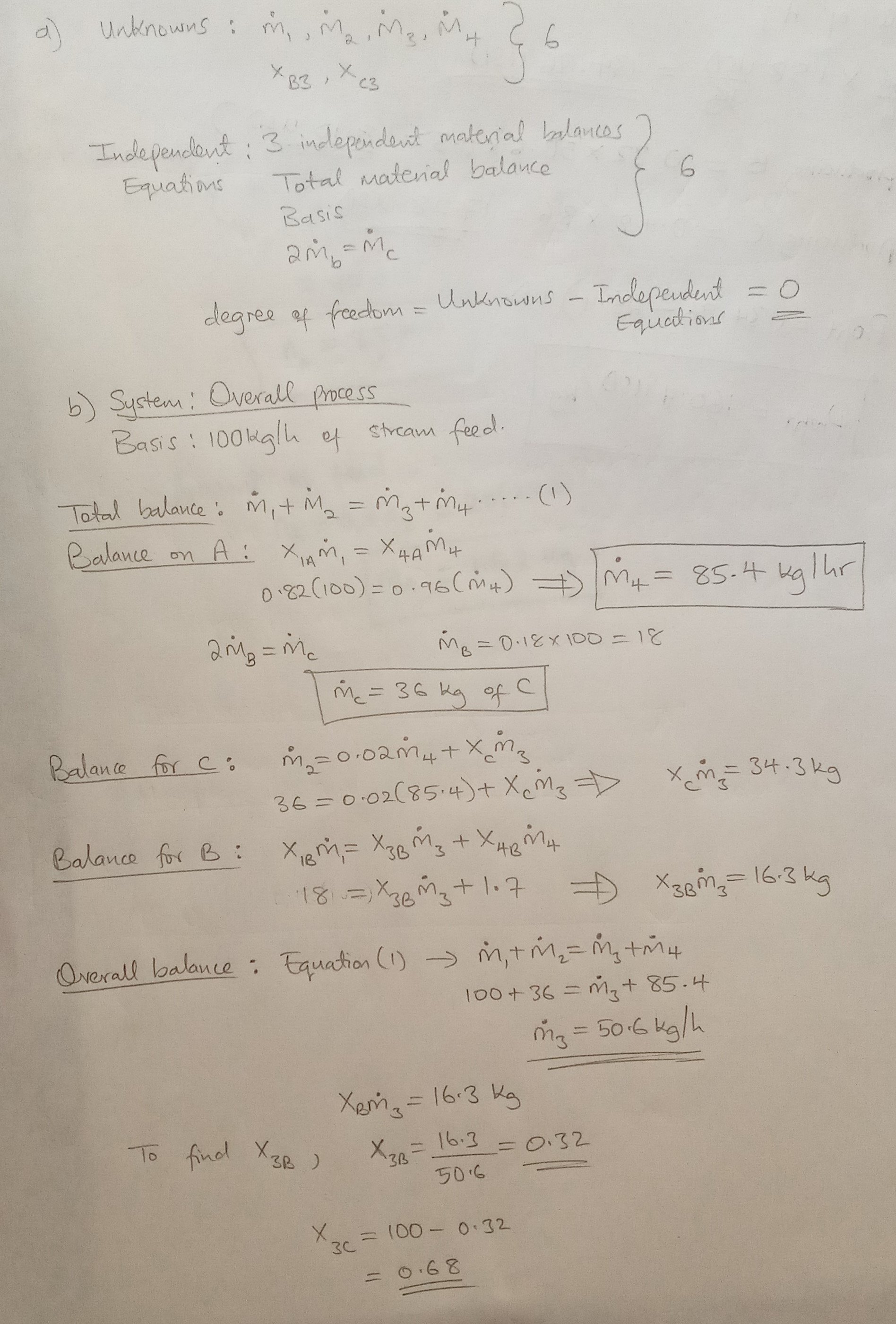
a) Determine the degree of freedom,
b) Determine all the flowrates and compositions,
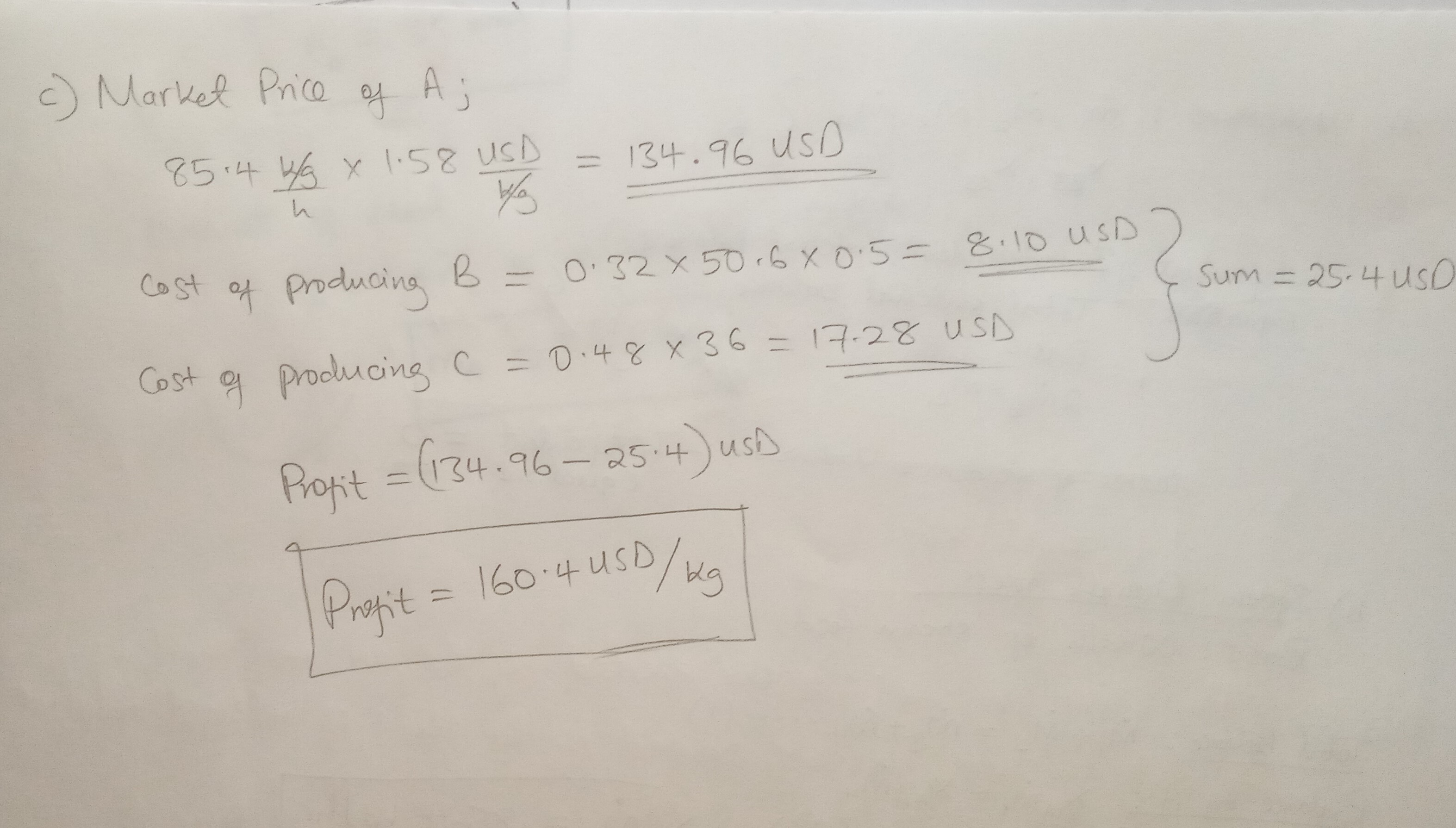
c) Calculate the production cost of stream 4 per kg and compare it with the market price of mixture with 96% species A
Solution
Example 2
CO combines with Cl2 to form COCl2 gas. The feed to a reactor operating at steady state is a mixture of only CO and Cl2. After the reaction the product contains 12 mol COCl2, 3 mol Cl2 and 8 mol CO.
a) What is the percent excess,
b) What is the conversion of the limiting reactant,
c) What is the amount of feed in kg.
Solution


